 Skip to content

When Should You Replace the Timing Belt of Your Car?
It’s easy to overlook what’s happening under the bonnet until something goes wrong. A worn timing belt might seem minor at first, but it can throw your engine out of sync, leading to poor performance. If not dealt with on time, it might cause significant damage or even leave you stranded.
A timing belt is an essential component of your car. It coordinates the rotations of the crankshaft and camshaft so that the engine performs at full capacity. Due to constant use, it gradually wears out and needs timely replacement to avoid damage.
While replacing a timing belt isn’t that cheap, skipping it can lead to a catastrophic failure and an even bigger bill. That’s why it’s better to stay on top of its maintenance than deal with the breakdown.
This blog will cover the essential things you need to know about how this component works and the signs that it’s time to change it.
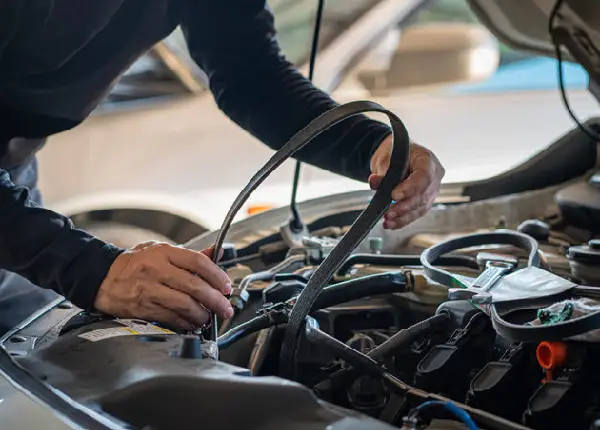
What is a Timing Belt?
Have you ever wondered what helps your car’s engine work smoothly? The timing belt is a key player here. It works behind the scenes to keep valves and pistons moving in perfect sync so everything runs as it should.
This component, also known as a camshaft belt, is a banded loop of sturdy rubber with strong nylon inside for added strength. Positioned between the pistons and valves, it handles a lot of pressure every day, which causes its deterioration over time.
Here is how it works:
- Connects the camshaft and crankshaft to keep them rotating together at the right speed
- Controls the timing of when valves open and close in sync with the pistons
- Prevents collision between the valve and piston
- Keeps combustion cycles functioning as required
- Maintains engine rhythm, so the car starts, runs, and accelerates properly
How Long Does a Timing Belt Last?
A common question many car owners ask is, ”How long does a timing belt last?” The expected lifespan of this component is specific to each car and engine configuration. That being said, every vehicle will have a manufacturer’s recommendations on when to replace it. These intervals are usually somewhere between 110,000 to 145,000 kilometres.
What Happens When a Timing Belt is Worn Out?
Like any other part, the timing belt of a car gradually wears out. If ignored, a worn belt can lead to serious trouble. In some cases, the engine might suddenly stop running, leaving the car stranded in the middle of the road.
In more severe situations, the belt may snap while the engine is still functioning. This can cause the valves and pistons to collide, bending or breaking internal parts. Moreover, in the worst-case scenario, the damage can be so extensive that your engine might experience a complete failure.
The level of wear to the timing belt also depends on the engine type. For instance, interference engines are more vulnerable because they run with tighter clearances. If the timing is off in these engines, the pistons and valves may collide. Non-interference engines, on the contrary, have more space inside. While they’re less likely to suffer catastrophic damage, a snapped belt can still stop the engine in its tracks.
Signs You Need a Timing Belt Replacement
Timing belts are strong, but constantly operating in high-heat environments, which makes them impossible to last forever. Most drivers are not sure when to replace the timing belt. However, several warning signs can help determine if it’s time to get a new one. They include:
-
Engine Misfires:
Timing belts run over pulleys to connect the camshaft and crankshaft. The teeth they use for this process wear out with its frequent use. When it does, it starts making a click or tick noise from inside the engine.
-
Smoke After Starting the Car:
Belt stretching might damage the catalytic converter. When the belt stretches, unburned fuel can reach the exhaust system and cause the catalytic converter to overheat. If you see black smoke emerging from the vehicle’s exhaust system, this indicates incorrect fuel combustion. Moreover, it suggests that the auto timing belt isn’t working as it should
-
Trouble Starting:
A damaged belt can affect your engine’s ability to start smoothly. This happens when stretching causes the belt to skip teeth on the camshaft. As a result, the cylinders open and close at the wrong time, making the engine harder to fire up.
-
Belt Appearance:
The way your timing belt looks is one of the top indicators of its condition. Cracks, fraying edges, or missing teeth are all signs the belt may be close to failing. If it looks worn, you should get it replaced as soon as possible.
Contact Gunceler Motors for Timing Belt Replacement
Unless you’re an expert on car engines, timing belt replacement is best left to professionals. At Gunceler Motors in Brooklyn Melbourne, we offer a thorough timing belt service for a wide range of vehicles. With experienced technicians and advanced tools, we can get the job done right the first time.
Don’t wait for warning signs to become serious problems. Call us today on 0421 793 338 to book your timing belt inspection in Melbourne. Alternatively, you can also email us at guncelermotors@hotmail.com for a quote.